Geirangerfjord
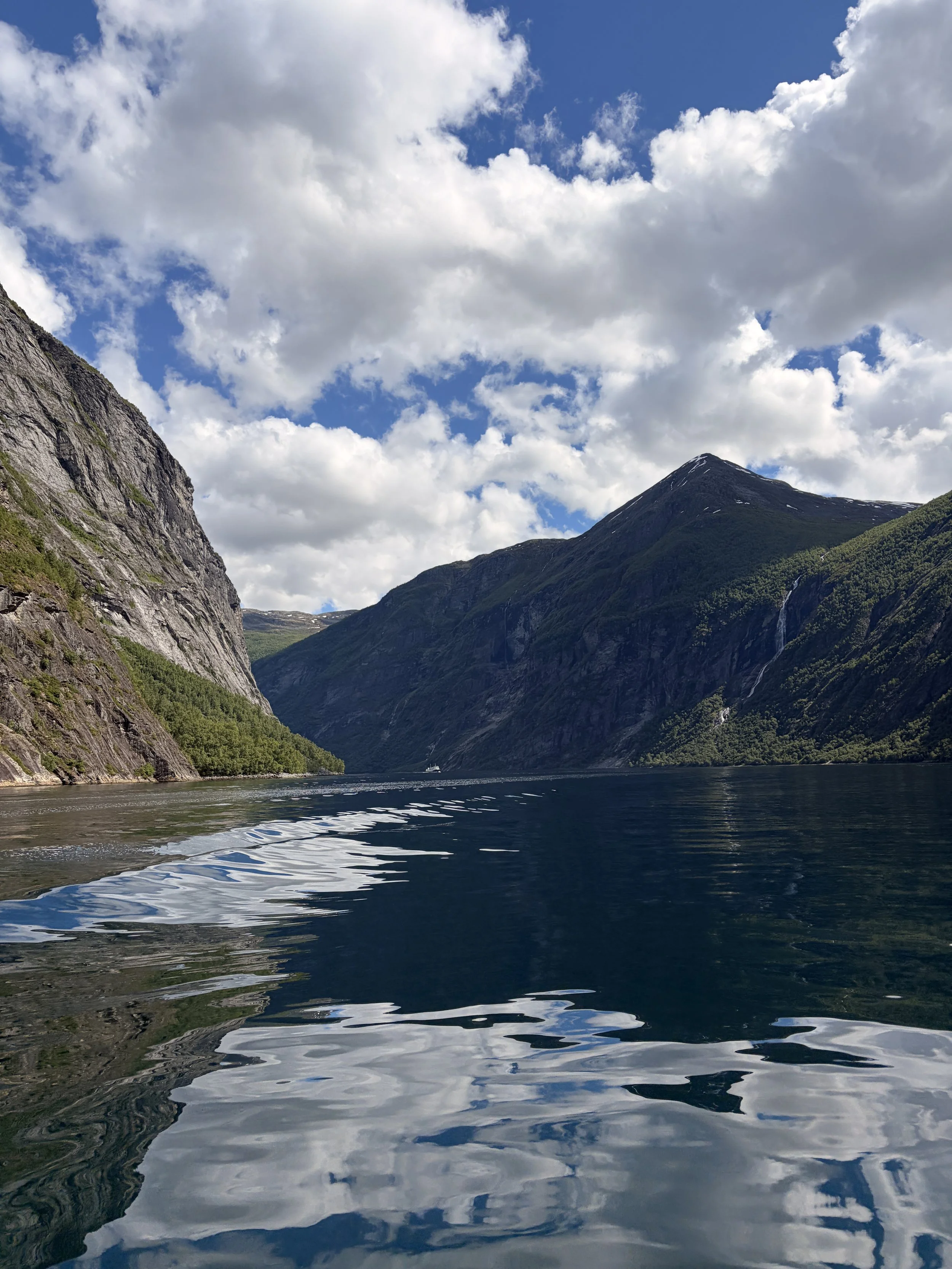
Again, I am standing aboard a vessel, passing through another impressive site in Norway: the Geirangerfjord.
It is cold – what else? But I hardly feel it. I am too fascinated by the raw power and profound harmony of the landscape surrounding me. Towering mountains and dramatic waterfalls mingle with the still, blue waters of the fjord.
The first word that comes to my mind is mystical. Simply mystical.
I feel small in front of this spectacle.
In this journal entry, I want to take you with me to one of Norway’s most iconic and photographed fjords: the Geirangerfjord.
Geiranger encapsulates the purest essence of Norway. Within a distance of just 15 kilometers, you witness a spectacle that feels like a once-in-a-lifetime experience. Mountains rise magnificently above the water, while waterfalls cascade down their faces like silver threads.
The water has an intense blue color. It lies still and deep in front of us, while the light is constantly shifting.
Every moment here feels different.
I have been here five times in the last two months, and every time I have been able to discover something new and take away new impressions.
So, what makes this place so special?
Let’s take a closer look at the landscape, the history and the places that should definitely be on your list when visiting Geirangerfjord.
Geiranger
Our ship lies in Geiranger, a small village that normally has fewer than 300 residents, yet transforms during summer into an international hub for nature lovers, adventure seekers and cruise ship guests.
The village is the ideal starting point for exploring the entire area.
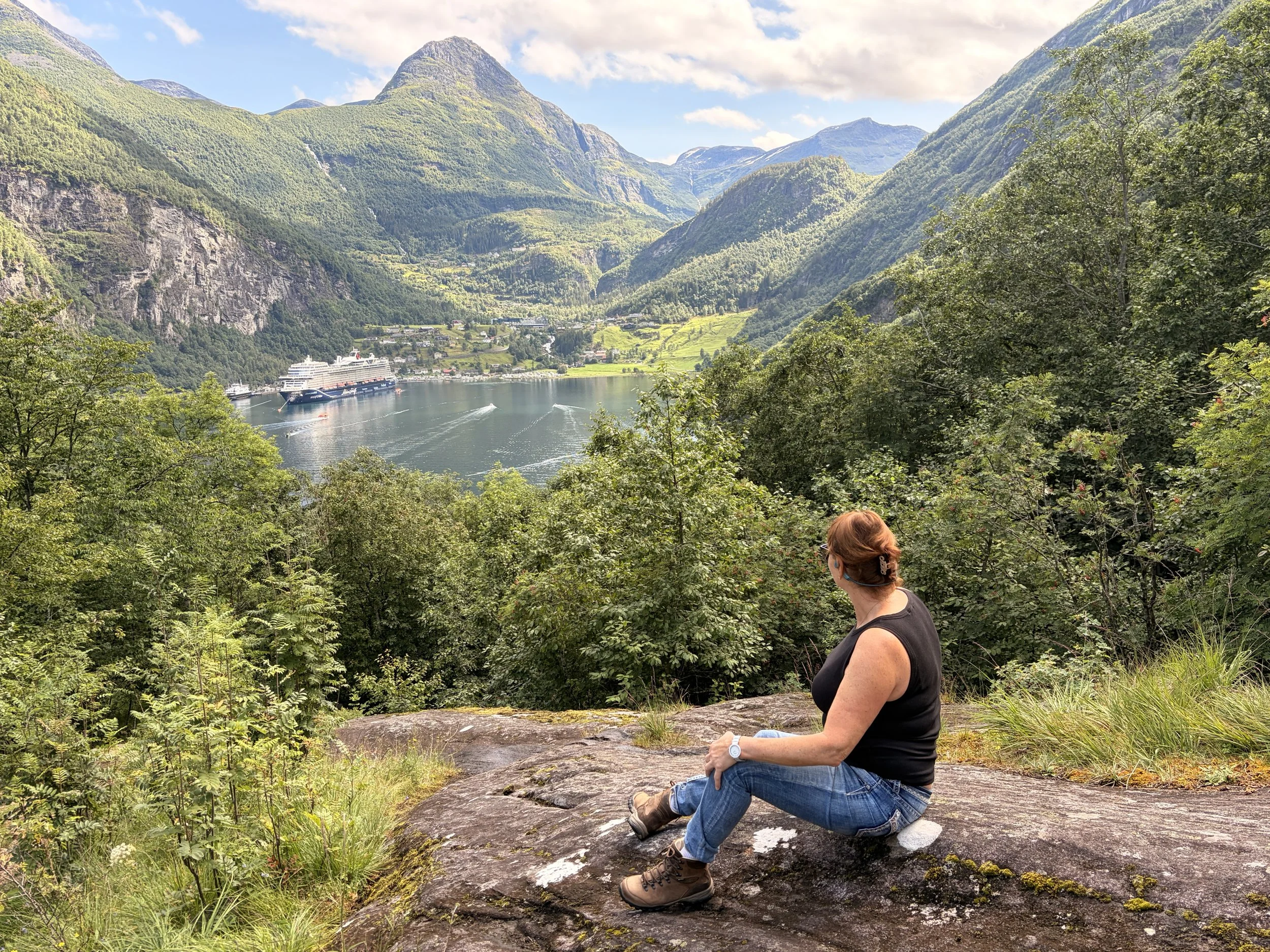
From here, you can ascend to the breathtaking panoramas of Dalsnibba or the Flydalsjuvet viewpoint.
Flydalsjuvet
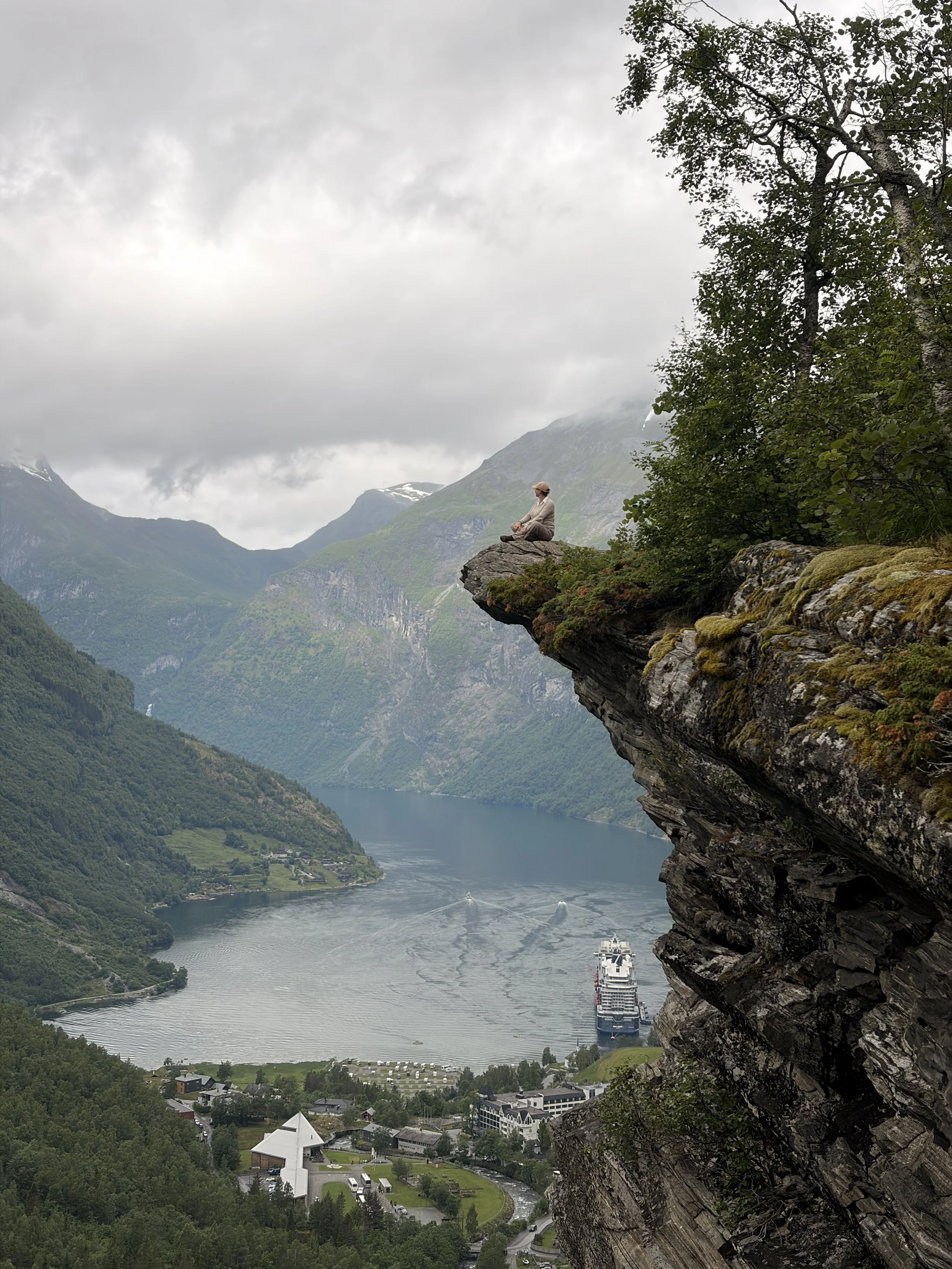
Did you know?
Flydalsjuvet I one of the most iconic and photographed viewpoints in Norway. It is a natural viewing platform above the village of Geiranger and the insta spot of the area; every social media fan who wants the iconic picture is eager to take it on the famous rock. To get the famous shot, take the slightly unofficial path behind the toilet booth.
Dalsnibba and the Geiranger Skywalk
At 1,500 meters above sea level, Dalsnibba offers one of the most amazing and vertigo-inducing viewpoints in the entire region. It is Europe’s highest fjord view from a road. .
The panoramic platform seems to jut straight out into the void, with a metal-grid floor and transparent railings.
From Geiranger, you can follow trails to the old, now abandoned fjord farms, or take a RIB tour and explore the famous Seven Sisters waterfall and their counterpart, the Suitor.
Nearby, on the other side of the fjord, the Ørnevegen, or Eagle Road, offers one of the most spectacular road views in Norway.
To the south, the Geiranger – Trollstigen National Tourist Route provides a continuous Succession of winding curves, deep valleys and dramatic views that capture the essence of Norway and its fjords.
It feels like a complete experience.
So, let’s delve into why Geirangerfjord is on my list of favourite things to do in Norway – and why I keep being fascinated by this wonderful spectacle of nature.
Geirangerfjord
Geirangerfjord is a specific arm of the Storfjord. It was designated UNESCO World Heritage Site in 2005 – and rightfully so. More precisely, it forms part of the UNESCO World Heritage property “West Norwegian Fjords” – Geirangerjord and Nærøyfjord, inscribed in 2005.
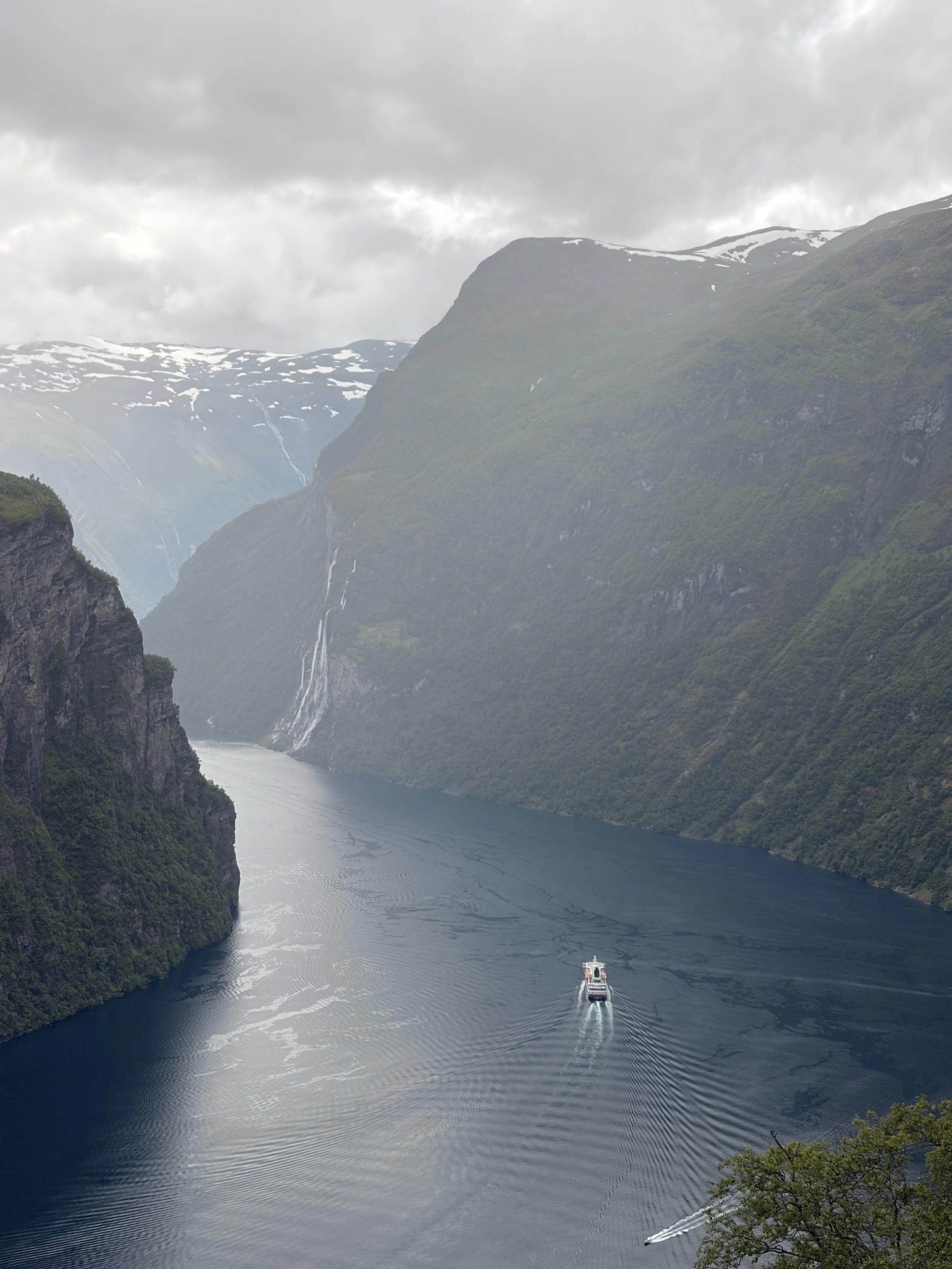
Its characteristic S-shape guarantees continuously changing views along the route. What impresses most are the legendary waterfalls that plunge from heights of up to 1,000 meters.
On both sides, you will find abandoned farms perched on narrow ledges, hundreds of meters above the water.
It seems almost impossible that somebody once lived there. Yet these farms bear witness to the resilience and determination of the Norwegians who lived here for centuries.
Probably the best known farm is Skageflå.
It is the most famous and spectacular of the historic mountain farms in Geirangerfjord. The farm is located on a narrow rock ledge, around 270 meters above sea level.
It seems nearly impossible that anyone could have lived there permanently.
Yet it was inhabited for generations and remained operational until 1916.
Reaching the farm meant climbing and descending an arduous path that takes around two and a half hours to climb.
Still today, you can hike up to the farm via a challenging trail that starts from the small harbor of Skagehola. The trail is steep, but the views over the fjord and the seven Sisters make the effort worthwhile.
Skageflå and the Norwegian Royal Family
Skageflå is not only one of the most spectacular farms along the Geirangerfjord. It also has a fascinating connection to the Norwegian Royal Family.
On August 29, 1993, King Harald V and Queen Sonja celebrated their silver wedding anniversary here at Skageflå.
The royal couple chose this historic farm perched above the fjord for the celebration.
Members of several European royal and noble families were invited to the celebration.
The setting could hardly have been more spectacular: a long festive table at the old farm, surrounded by steep mountains, the fjord and the famous Seven Sisters.
The choice of the farm was very much in keeping with the couple’s affection for Norway’s natural and cultural heritage. Queen Sonja, in particular, enjoys hiking in the area and has a strong connection to the fjord. Queen returned to Skageflå in 2006 to unveil the commemorative plaque marking the fjord’s recognition as a UNESCO World Heritage Site.
So, Skageflå represents a remarkable contrast between two worlds: the harsh, isolated life of the farmers who once lived here and a royal celebration high above the fjord.
Vesterås Farm
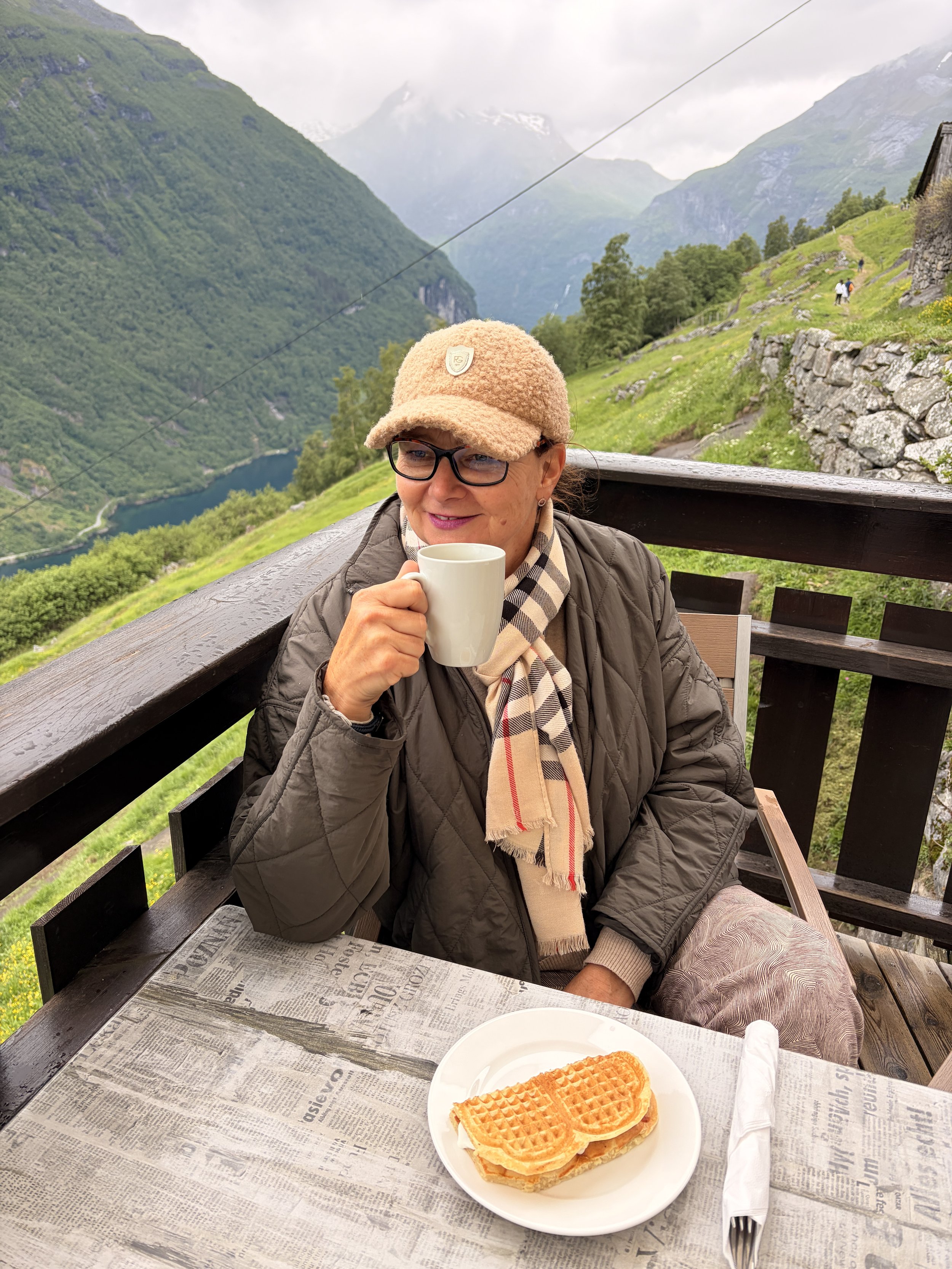
Another farm that is worth a visit is Vesterås Farm.
It is still active and fully functional and is located at about 320 meters above sea level along the road to Storseterfossen Waterfall.
You can reach the farm by car from Geiranger, or you can hike up from the village.
I recommend stopping for a coffee or Norwegian waffles on the breathtaking panoramic terrace, which offers a direct view of the Geirangerfjord. auch immer es ist – die Art und Weise, wie du deine Geschichte online vermittelst, kann einen gewaltigen Unterschied ausmachen.
The Seven Sisters and the Suitor
The Seven Sisters is unbdoubtedly the most photographed and celebrated waterfall of the Geirangerfjord.
Fed by the river Knivsflåfossen, it consists of seven distinct streams of water that cascade down the mountainside.
The seven streams have an average free fall of around 250 meters.
Located on the northern side of the fjord, this natural wonder is particularly dramatic in spring, when the snow begins to melt in the mountains above.
The individual streams can change considerably in strength depending on the rainfall and snowmelt, so on a dry summer day, you may not see all seven streams.
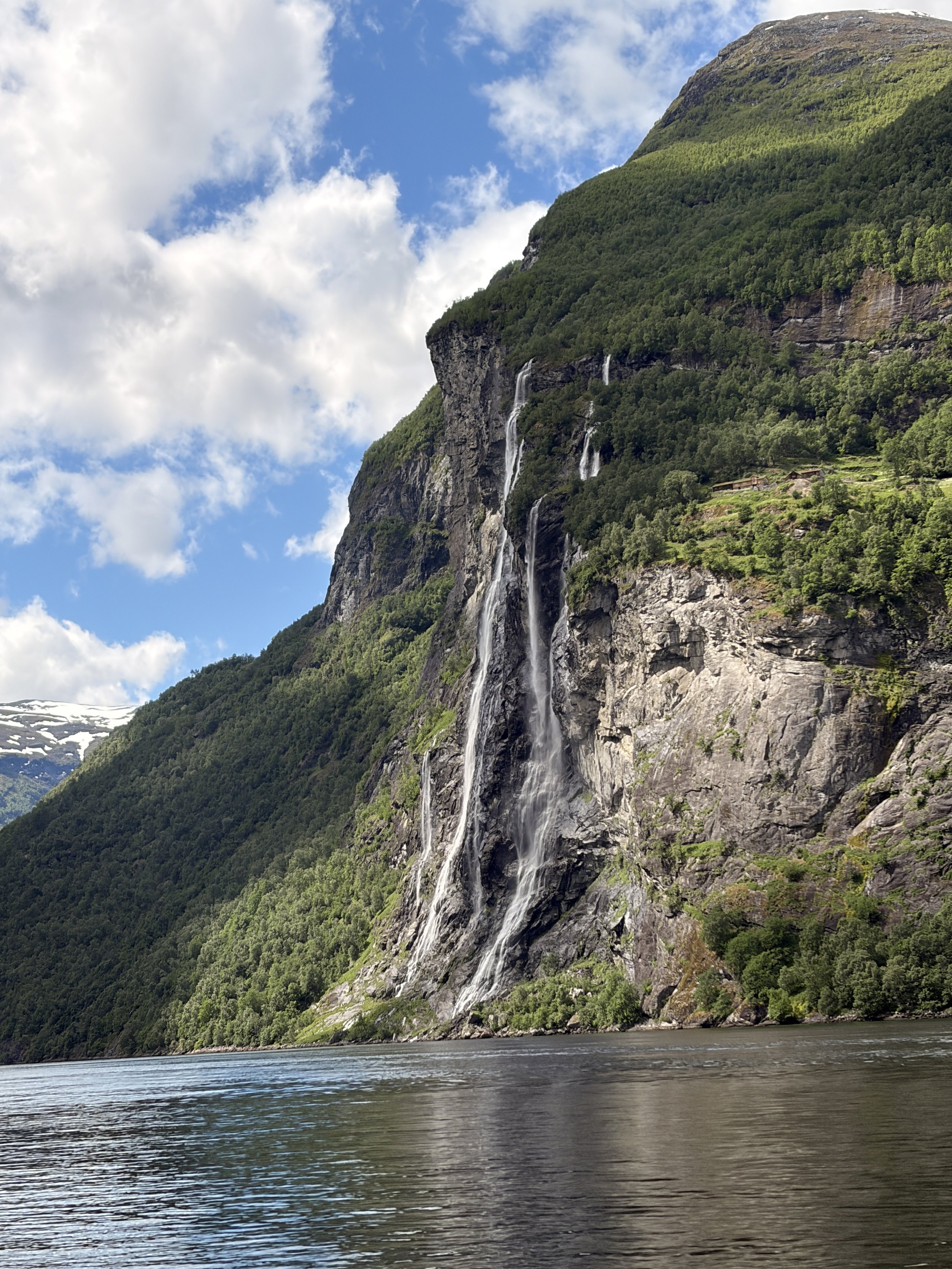
The poetic name originates from an ancient legend that tells of seven sisters dancing playfully down the mountain.
The seven separate streams can look like the long, flowing hair of seven women standing side by side.
But the women were not alone.
On the opposite side of the fjord is another waterfall, called the Suitor.
The two waterfalls face each other across the fjord, permanently separated by water.
The story goes that the Suitor fell in love with the Seven Sisters. He repeatedly tried to court them, one after the other, but the Seven Sisters refused his advances again and again.
Eventually, the rejected Suitor became so miserable that he turned to the bottle.
The Suitor waterfall has a distinctive shape, with exposed rock in the middle of the falling water that resembles a bottle.
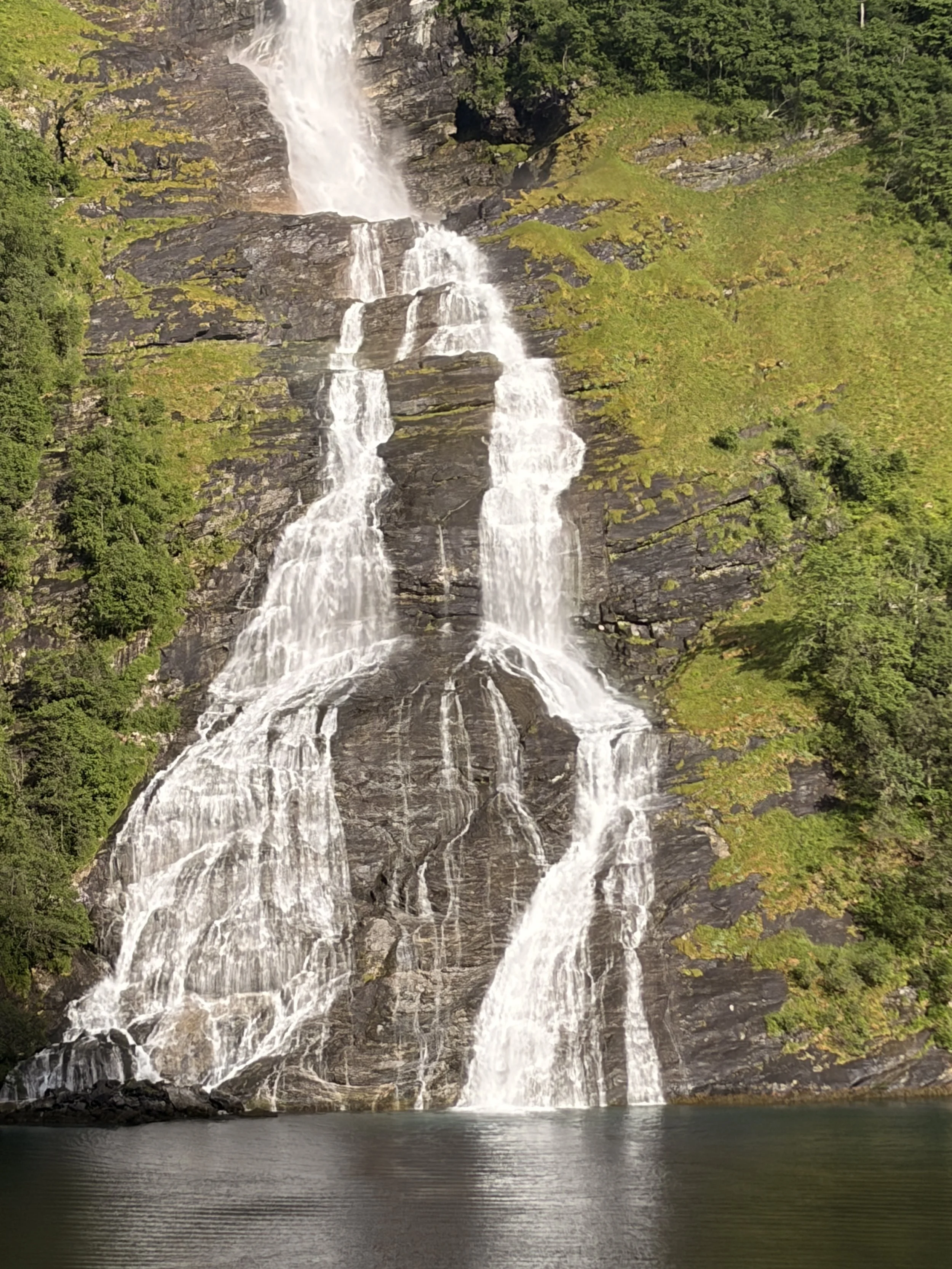
So, according to the legend, the unfortunate Suitor ended up hitting the bottle after being rejected by the Seven Sisters.
To complete the legend, there is a third waterfall nearby, called the Bridal Veil (Brudesløret).
Together, all three create a theatrical little world of sisters, suitors and a bride.
But the real story is older than the legend.
This landscape was created over successive Ice Ages. Enormous glaciers slowly carved their way through the mountains, deepening and widening existing valleys.
When the glaciers retreated, seawater flooded the enormous glacial valley, creating the fjord landscape we see today.
The Seven Sisters are therefore not simply waterfalls that happen to be beautiful. They are a visible expression of the geological history of the entire fjord.
The Eagle Road
The best way to admire the waterfalls is from the water – by RIB, ferry, kayak or cruise ship.
The ferry from Geiranger to Hellesylt takes about one hour and offers a slow, scenic journey.
Alternatively, you can use the Ørnesvingen viewpoint on the Eagle Road, high above the fjord, to admire the waterfalls.
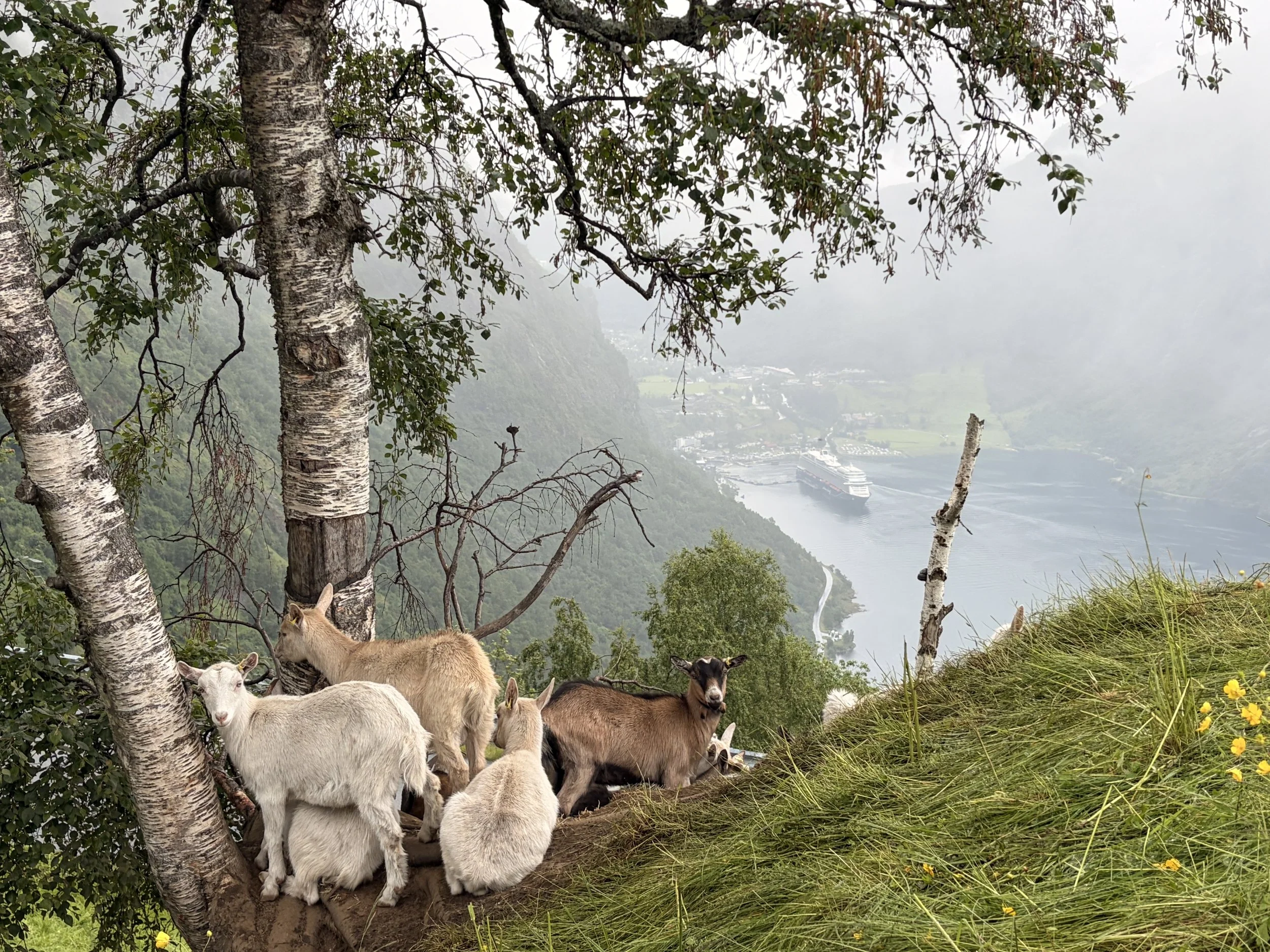
The Eagle’s Bend is the most spectacular viewpoint along the Eagle Road, Ørnesvegen. It forms part of the Geiranger – Trollstigen National Tourist Route.
The road climbs steeply through a series of hairpin bends from Geiranger village to Eidsdal with Ørnesvingen viewpoint offering a spectacular view over the fjord.
The Norwegian Fjord Center
Just above the village of Geiranger, the Norwegian Fjord Center serves as the official visitor Center for the UNESCO World Heritage Site.
Here, you can delve deeper into the natural and cultural history of the region.
The center offers interactive multimedia exhibitions explaining the geological processes that led to the formation of the fjords. It also covers the biodiversity of the fjord and the history of the communities that have lived in this harsh environment for centuries.
One of the museum’s most compelling sections is dedicated to the ancient, now-abandoned farms in the mountains, scattered along the fjord’s walls.
You can reach the center via the Waterfall Walk, a well-equipped trail featuring 327 steps that ascend alongside the Storfossen Stream.
The walk is easy and takes about 20 minutes.
Geiranger Church
Geiranger Church was built in 1842 in the unusual octagonal floor plan typical of Norwegian architecture of the era.
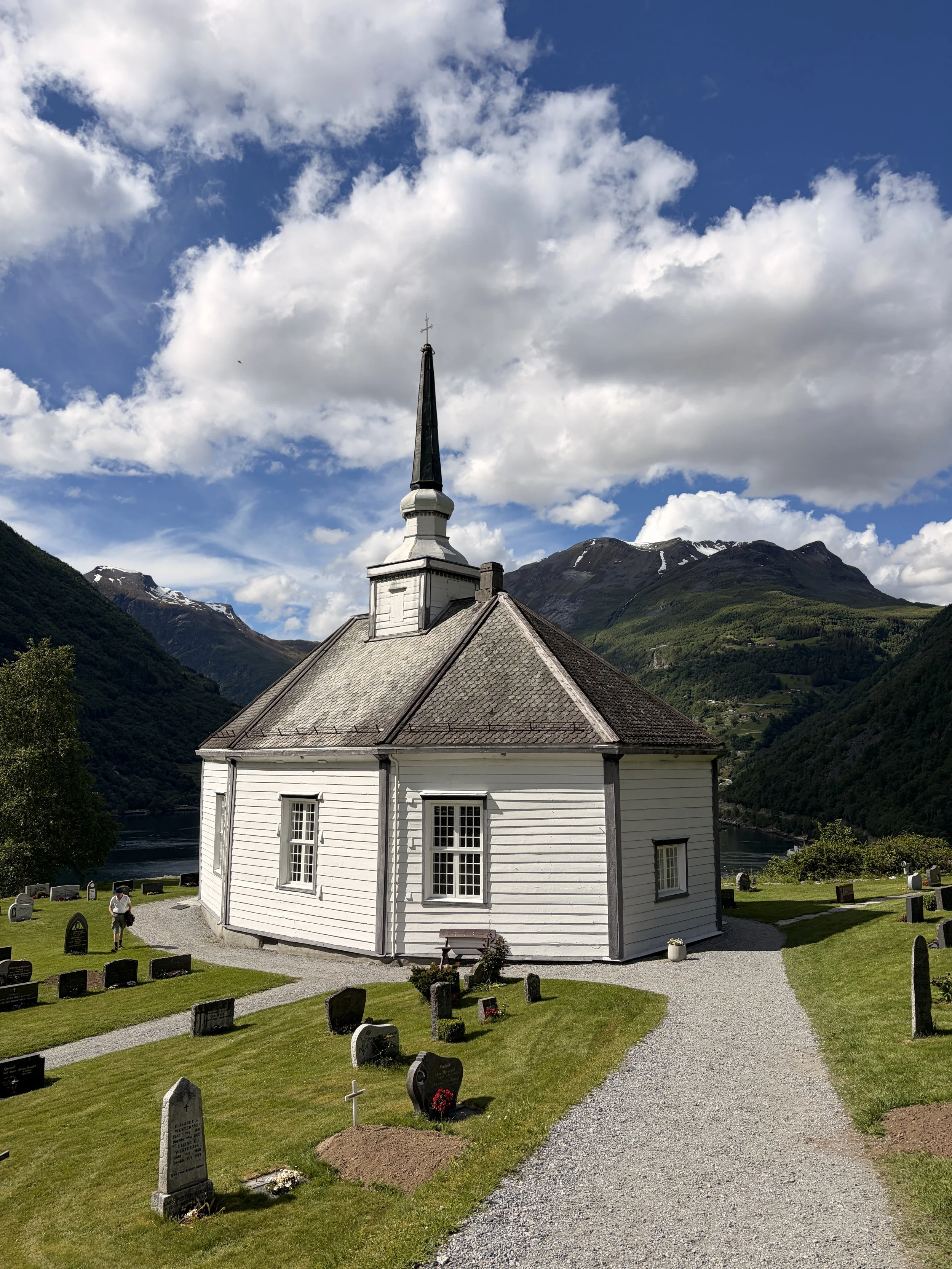
It stands next to a small cemetery and, strangely enough, was closed every time I Visited Geiranger.
Trolls – Norway’s original troublemakers
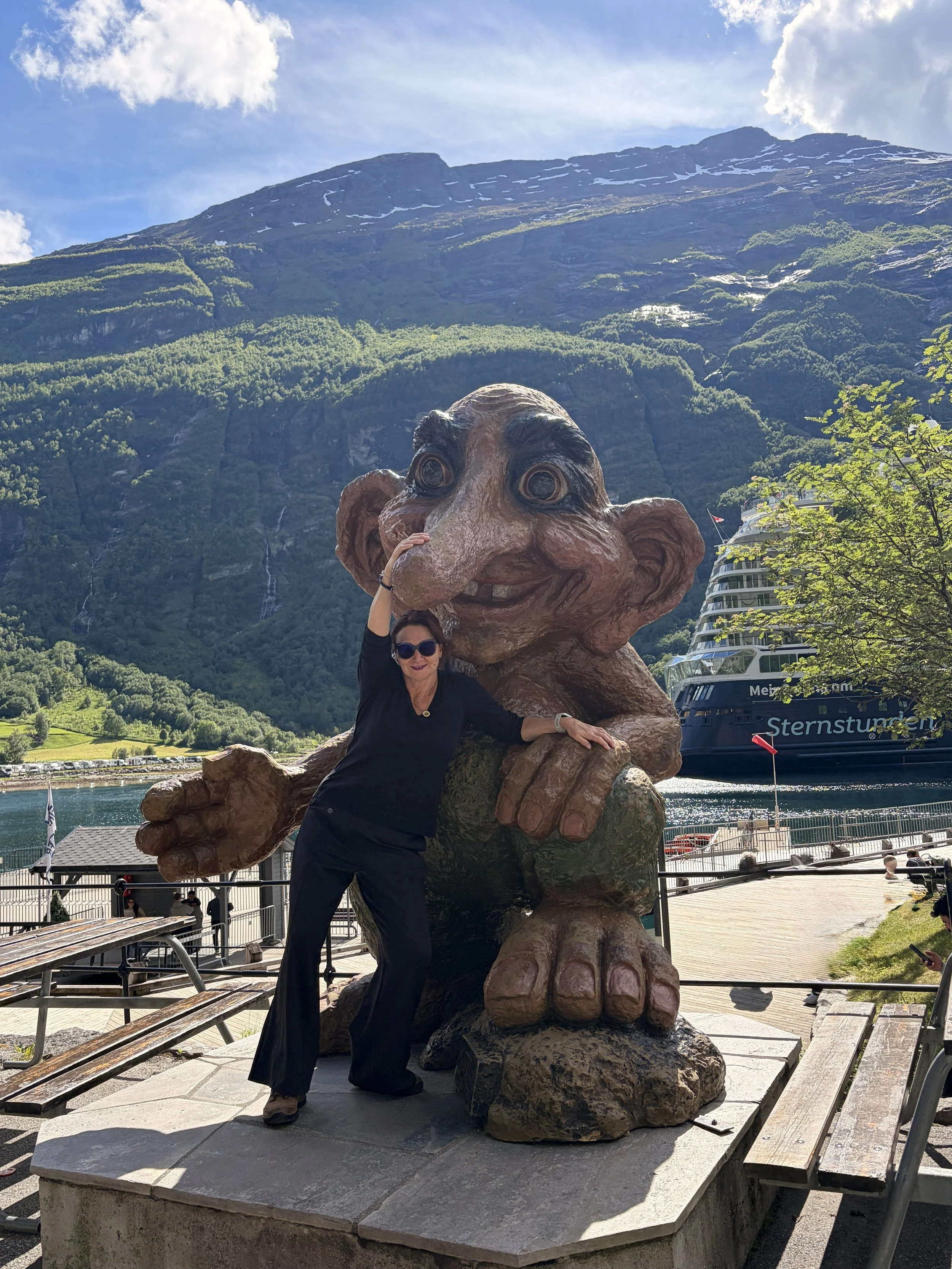
According to Norwegian folklore, trolls live deep in the mountains, inside caves and beneath huge rocks. They are generally not known for being particularly clever. In fact, many Norwegian tales portray them as greedy, easily fooled and rather lazy. Trolls turn into stone when exposed to the sunlight. This is why you will find so many rock formations throughout Norway that supposedly used to be trolls.
Trolls are not exactly known for good manners. They steal livestock, kidnap people, and occasionally eat Christians. Their major weakness are Christian church bells. According to legend, they cannot stand the sound of church bells and will run away when they hear them.
The Huldra
If trolls are Norway’s troublemakers, the Huldra is their mysterious forest counterpart. She is described as a beautiful woman who lives in the forest and lures men away from their paths. But there is one giveaway: She has a cow tail. So if you meet a beautiful woman in a forest, first check for her tail.
What surprised me most
The stunning beauty of the place – and how easy it is to book a RIB tour to the waterfalls at short notice, or to rent an electrical vehicle to explore the famous viewpoints.
There are surprisingly good cafés and a burger place that is always packed.
You can eat waffles and ice cream wherever you go.

My Personal Tip
There is also a very well equipped shop where you can buy a disposable BBQ grill and all the groceries you need for a spontaneous barbecue in front of the fjord at one of the picnic tables.
Whenever there is a cruise ship at the pier, you will see all kinds of Asian crew members grilling chicken, pork or other delicacies during their afternoon lunch break from the ship.
What astonished me was how easy it is to hike along the fjord and find astonishing views and picturesque places all along the way.
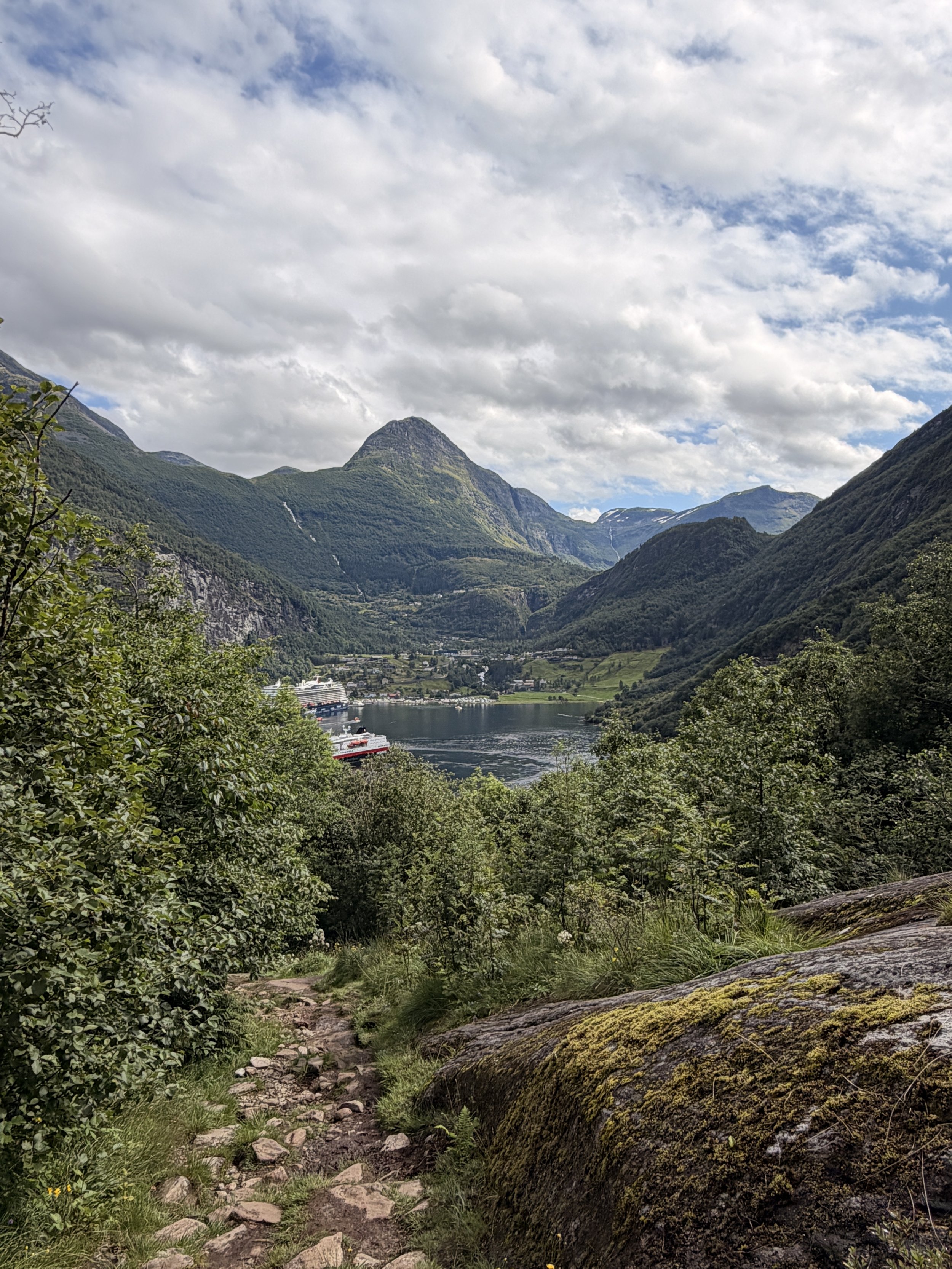
It does not matter in which direction you go; there is always something beautiful to discover.
I was stunned by the beauty of the place from the water and can only recommend exploring the fjord from the waterside.
Every time I was there, the waterfalls looked different, and the colors and light changed.
How did I feel?
Amazed and humble at the same time.
Excited by the spectacle that unfolded every time I passed the waterfalls and took in the stunning landscape.
Surprised to see so many motorbikes making this journey despite the adverse weather conditions in Norway.
Grateful to be able to experience one of the most stunning sites in Norway – and surprised that every time I was there, the weather was extraordinarily warm and sunny.
Surprised – and sometimes slightly shocked – by the prices. Norway is expensive, and Geiranger is no exception. A coffee, a waffle or a simple meal can quickly become quite a costly treat. The beauty may be priceless, but experiencing it certainly is not.
Practical Tips
Where to stay
Booking in advance is necessary, wherever you go.
There are campgrounds all along the way, but in summer they can be quite packed.
Best time to visit
Summer – June, July and August – offers long hours of daylight and temperatures between 15 and 25 ° C.
Spring and autumn offer advantages for more adventurous travelers.
In May and early June, the waterfalls are particularly powerful and spectacular.
In September and October, the Norwegian autumn brings a stunning contrast of colors.
How to get there
You can get there by cruise ship or you can take the 2,5 to 3 hour drive from Ålesund, which you can reach by plane. One of the most scenic ways to reach Geiranger is via Hellesylt and then continue by ferry. The car ferry takes you right through the fjord, and the journey itself is a major highlight.
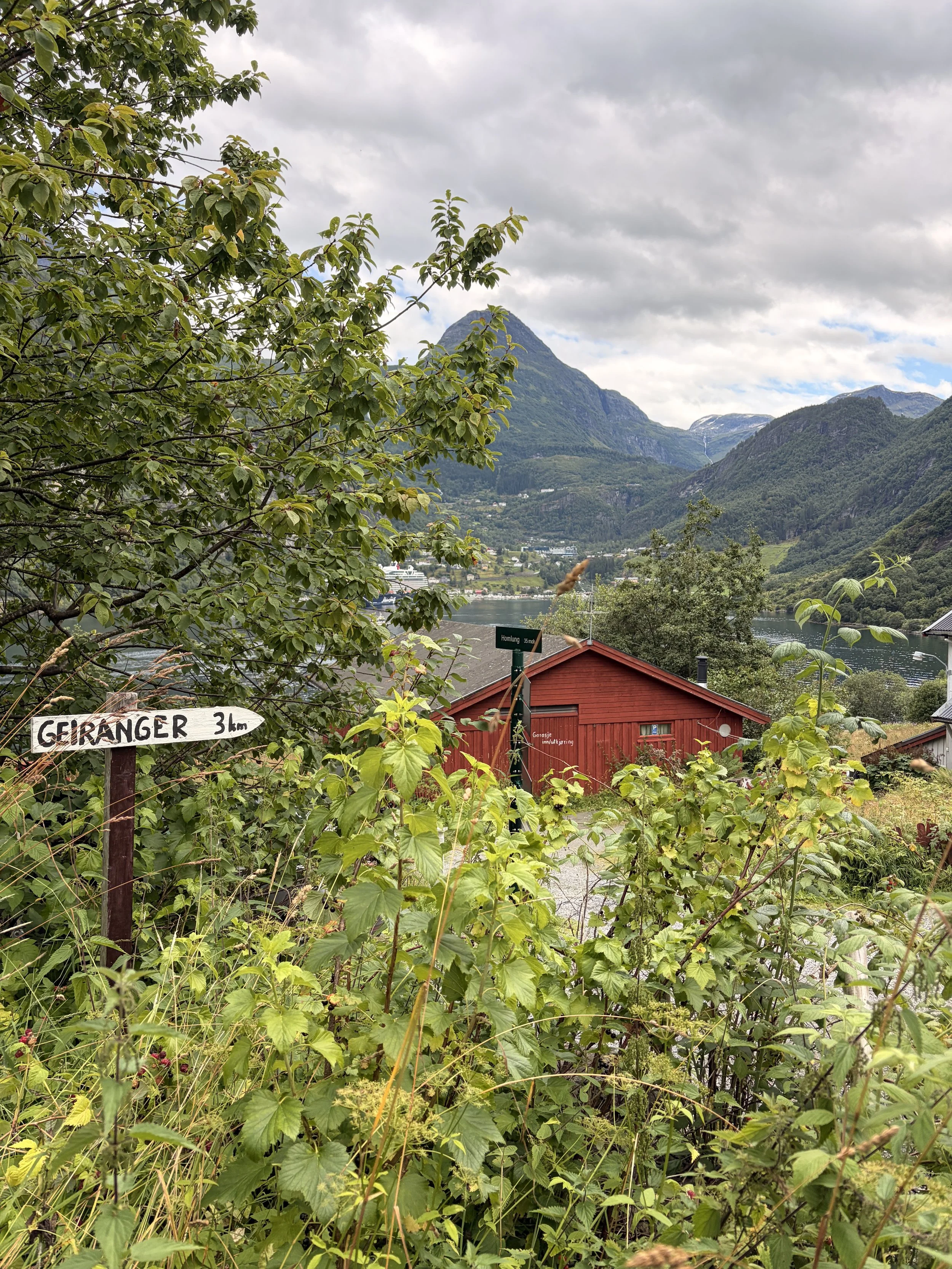
There is a seasonal bus connection from Ålesund.
The Ålesund – Trollstigen – Eagle Road - Geiranger road is probably the most spectacular approach by car and gives you excellent viewpoints along the way.
What not to miss
Take a boat trip on the fjord
This is, in my opinion, the best way to experience Geirangerfjord. From the water, the scale of the mountains becomes even more impressive, and you get close to the Seven Sisters, the Suitor and the old fjord farms.
Visit the SevenSisters
Try to see the waterfalls from the water rather than from above. Their appearance changes dependingon the season, rainfall and light.
Hike to Skageflå
If you are reasonably fit and enjoy hiking, this is one of the experiences I would not miss. The trail is steep and demanding, but the view from the old farm high above the fjord is unforgettable.
Drive to Eagle Road and stop at Ørnesvigen
The winding road and the view over Geirangerfjord are worth the drive. It gives you a completely different perspective from the one you get on the water.
Visit Flydalsjuvet
Get an electrical car or take the Hop on to Flydalsjuvet. If you want the iconic Geiranger photo, this is the place to go. The viewpoint offers a breathtaking panorama over Geiranger and the fjord.
And finally: leave some time simply to look
Sit down, have a coffee or a Norwegian waffle, and watch the mountains, the water and the changing light. Geiranger is not a place I would recommend rushing through.
A Seasoned Reflection
There are places you visit once and remember…
And then there are places you pass through again and again, only to realize that they never look quite the same.
For me, Geiranger is one of those places.
The waterfalls change with the weather, the light transforms the mountains, and the fjord seems to take on a different mood every time I enter it.
Perhaps this is what fascinates me most about Geirangerfjord.
It is simply beautiful.
It is alive.
And every time I pass through, I feel incredibly small – but at the same time incredibly lucky to be there…
Sources & Further Information
The information in this article is based on my own experiences and observations, complemented by information from official Norwegian tourism and heritage sources, including Visit Norway, UNESCO World Heritage Centre, the Norwegian Fjord Centre and Visit Geiranger.